For many children, walking to and from school is part of everyday life. But every journey comes with risks, crossing busy roads, walking alongside traffic and navigating roads where vehicles and pedestrians share limited space.
In Uganda, these risks are significant. In 2025, 5,383 people lost their lives in road crashes, an average of about 15 deaths every day. Pedestrians accounted for 1,776 of those deaths, making them one of the most vulnerable groups on Uganda’s roads. (Uganda Police Force)
For children, the concern is even more urgent. Uganda recorded 872 road traffic deaths among children aged 18 and below in 2023, equivalent to losing more than two children every day. (urreno.org.ug)
Against this backdrop, road safety education is not simply another lesson for children. It is a life skill.
Learning to navigate the road safely
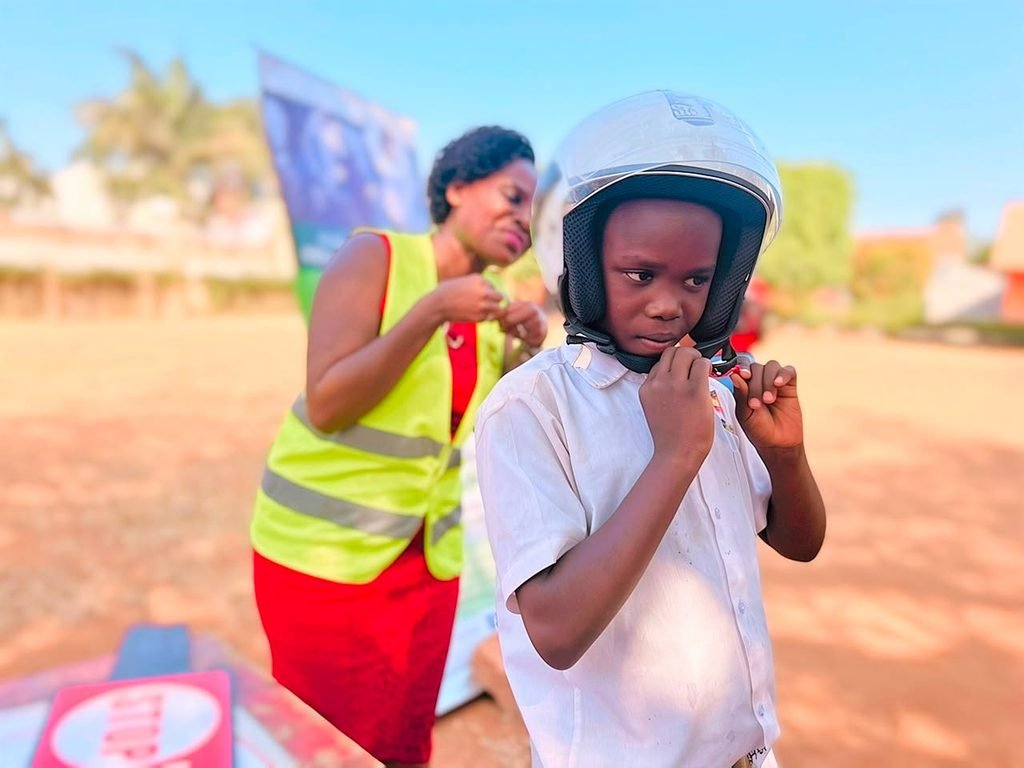
On 10 July 2026, pupils at Merowa Junior School participated in an interactive road safety training facilitated by Afrika Usalama.
The session formed part of 40 Days Over 40 Smiles Foundation’s (4040) ongoing commitment to creating safer and more supportive communities for children.
The training focused on practical knowledge that pupils can use every day, understanding road signs, knowing how to cross safely and recognising potential dangers when walking along or crossing roads.
For one pupil, the session helped make those lessons clearer:
“I learnt about road safety, especially how to cross the road, including road signs and what they mean.”
These may sound like simple lessons, but for children who regularly walk to school, they can be critical.
Uganda Police data shows that pedestrians continue to bear a significant share of the country’s road fatalities. (Monitor)
The real measure of a safety lesson is what happens after the lesson ends.
For another Merowa pupil, the training had already translated into a change they intended to make:
“I am going to start using the pedestrian walkway when I am coming from school or home. I will also tell my sisters about what we learnt here today.”
That reflection captures why child-centred road safety education matters.
A child who learns how to use a pedestrian walkway can practise that behaviour every day. A child who understands road signs can recognise risks more easily. And a child who shares what they have learnt can extend that knowledge to siblings, friends and family.
Why start with children?
For the facilitator from Afrika Usalama, the reason for working with children is clear.
“I came to do this session because we are losing so many young people in road crashes. It is important to teach children at a young age because they will not forget.”
There is another reason too: children are among the road users most likely to encounter traffic as pedestrians.
“Most of the learners are pedestrians. They see the road signs, but they don’t know what they mean.”
The session therefore went beyond telling children to “be careful.” It helped them understand what the signs around them mean and how they can make safer choices.
Keeping children safe is everyone’s responsibility
Children can learn safer road practices, but they cannot make roads safe on their own.
Parents and caregivers have a role to play in reinforcing safe habits. Schools can continue providing road safety education. Drivers and boda boda riders have a responsibility to exercise greater care around children. Communities can advocate for safer roads, crossings and school zones.
For 4040, this is part of a broader commitment to ensuring that children are not only given opportunities to learn, but are supported to live, travel and grow in safer environments.
The training at Merowa Junior School was one small step towards that goal.
We appreciate Afrika Usalama for sharing their expertise, the Merowa school community for welcoming the training, and the 4040 volunteers who helped make the session possible.
Most importantly, the pupils left with knowledge they can carry beyond the classroom, onto the roads, on their journeys to and from school, and into their everyday lives.
Because every child should be able to leave home for school and return safely.