There is a quiet idea at the heart of Drop Everything And Read (D.E.A.R) Day;
that reading is important enough to stop everything else for.
D.E.A.R is an acronym for ‘Drop Everything and Read.’
It’s inspired by the beloved children’s book Ramona Quimby, Age 8 by Beverly Cleary, where a school activity encourages everyone to stop what they’re doing and read.
In Uganda , The Ministry of Education and Sports designated 15th March of every year as the national DEAR day celebration for all primary schools in Uganda. On this day, at exactly 11.00am everyone drops everything to read.
For us at 40 Days Over 40 Smiles Foundation (4040) , D.E.A.R.Day felt familiar because for years, our work has been about creating exactly that kind of pause! A moment where a child can sit with a book, imagine and discover something new.
Through the Angaza Outreach programme and the Angaza Resource Centre, the goal has remained steady: bring learning closer, and make it feel possible.
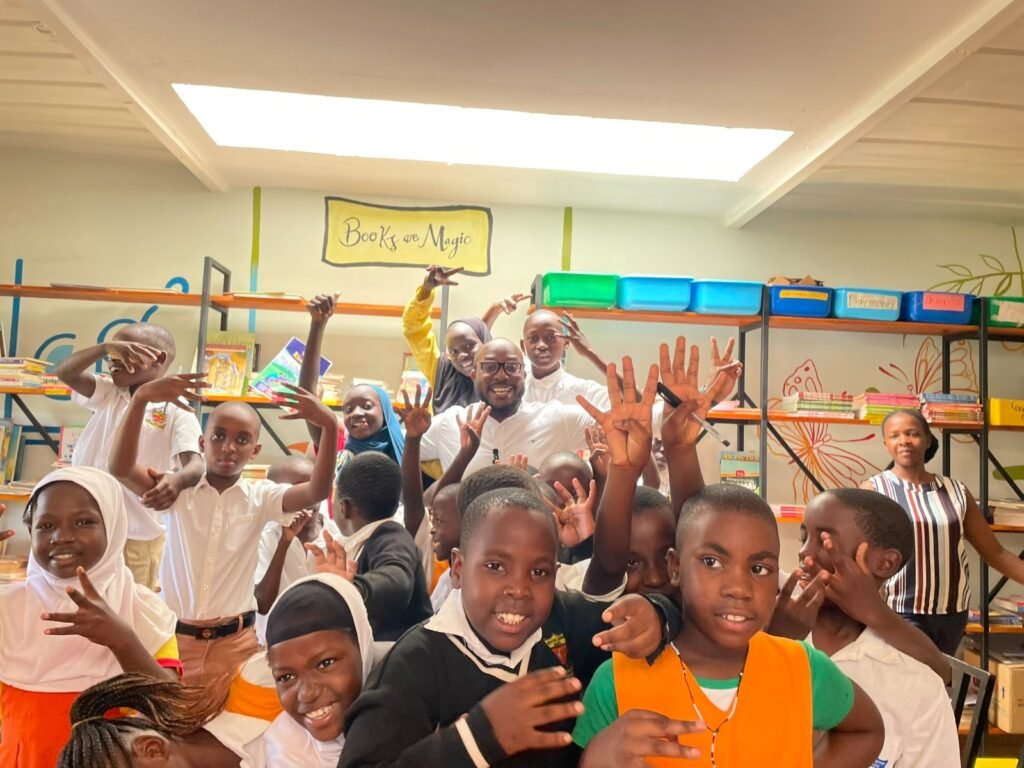
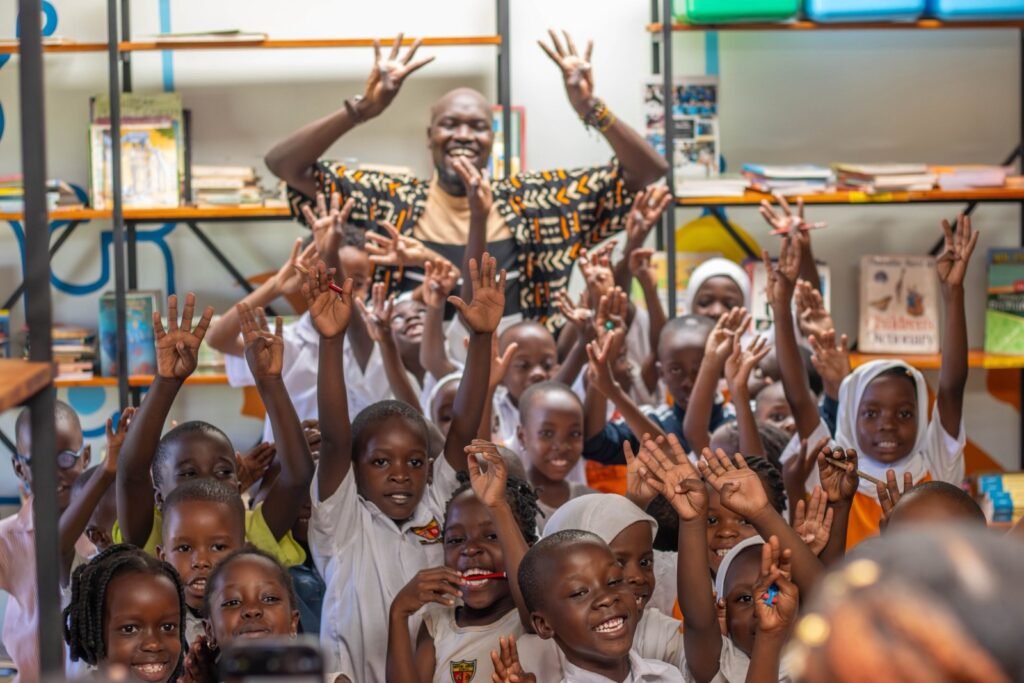
From the 16th to 20th March 2026 , the Angaza Resource Centre space took on a different rhythm. We paused much more to read more, just books, voices and time.
Each day, different guest readers stepped into the space to pause with the children and read, each bringing their own energy, pace, and way of telling a story. Together, they explored a range of books by different writers. Guest readers included Media personalities like Bewool, Tucker HD, Fiona Kemi, Obed Lutale, Laura Kahunde, and creatives like Arnold Suuna. Change makers like Amos Kiyingi, Mpindi Abaas & Phidra Aturinda, Social workers like Elizabeth Nkurunziza, Claire Alodia, Priscilla Sanyu, Evelyn Karungi, Suzan Nasweri and the OGs of 4040, Grace Kengazi and Gloria Kemigisha.
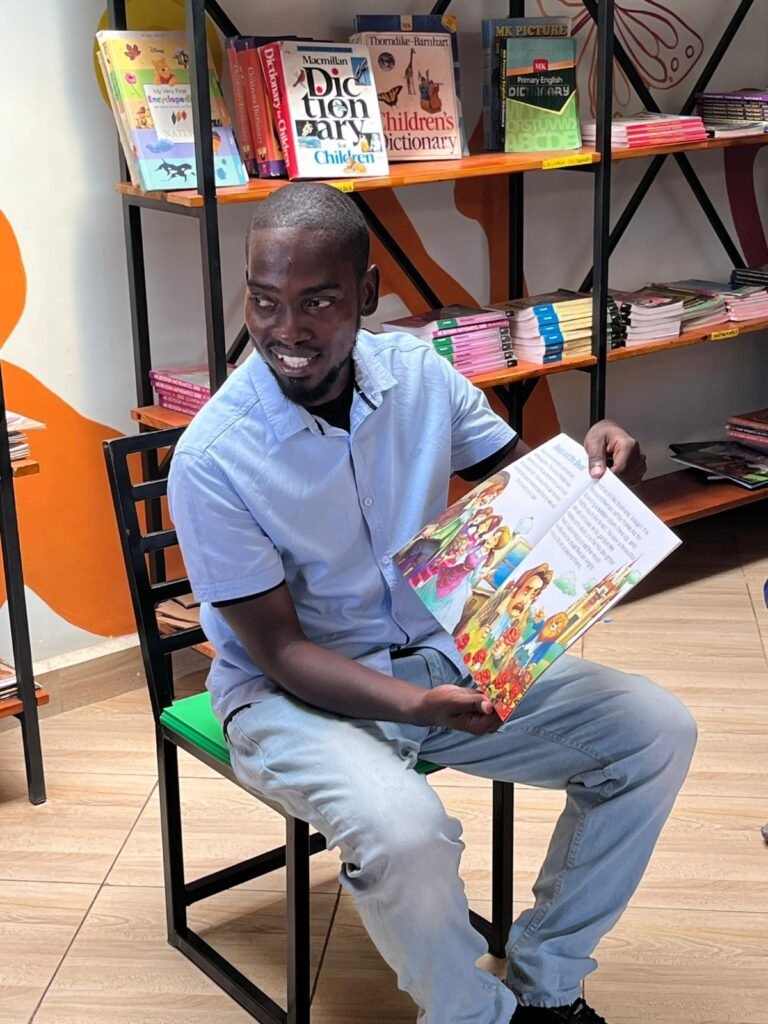
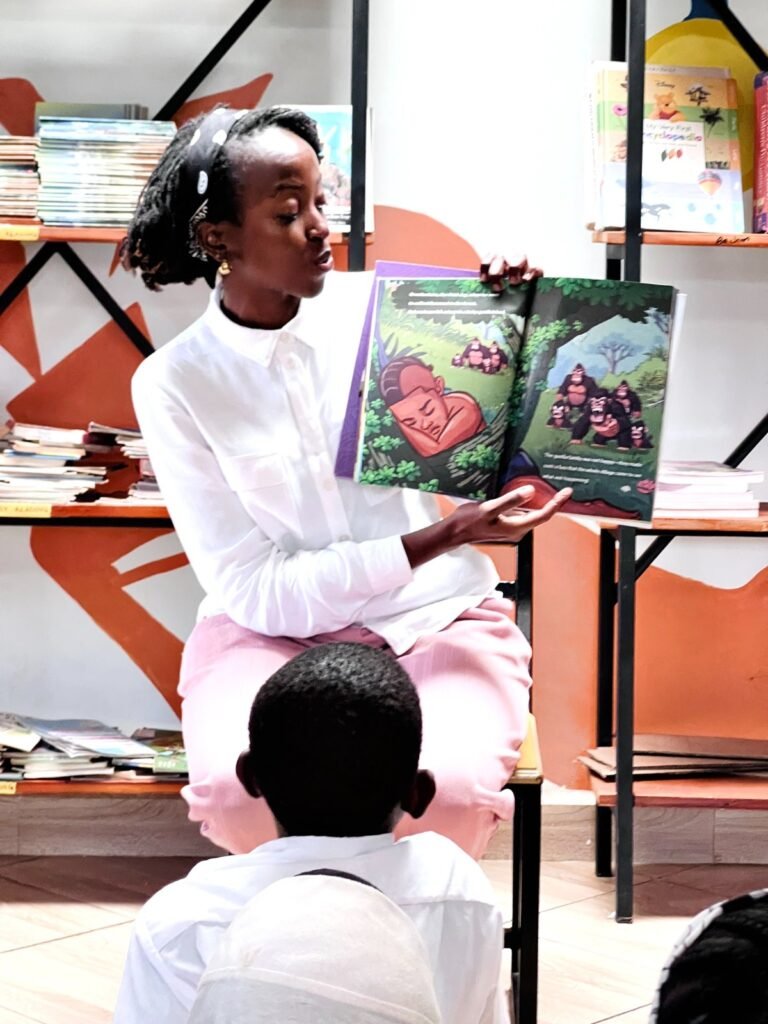
There was no single way the sessions unfolded. Some readers animated every page, others slowed things down, letting the children sit with the story. But in every case, the room felt alive.
“I hadn’t been around this many children in a long time- I felt excited. It was so much fun watching them listen and interact,” Fiona Kemi, who read Ruhondeeza the Sleepy Giant.
The books chosen were not random. They were intentional; stories that reflected familiar experiences, everyday life, and lessons children could easily connect with. This made each session feel less like a lesson and more like a shared moment.
“This is really good that you are doing at the resource centre,” Bewool noted.
For many of the children, reading is often tied to school, structured, assessed and sometimes rushed. But here, books became shared. Stories became conversations. And reading, for a moment, became something to enjoy rather than complete, because access to books is one part of the story, but what happens when a child feels invited into it.
The children showed us what exactly that looks like. They laughed out loud,asked questions mid-story, spoke freely about what they understood and felt. Each came with a different kind of energy and they responded in a kind.
What remained constant is the excitement. This could be seen in how they gathered and quickly settled all eager to be part of the sessions.
The timing of these reading days could not have been more fitting. It was when we were having our Little by Little campaign to build a mobile library, The need to bring books beyond a single location is becoming more urgent.
While the Angaza Resource Centre has created a space for learning, many children still live too far to access it regularly. The question now is no longer just how to create a reading space, but how to take that space to where children already are.
Moments like #DropEverythingAndRead offers a glimpse into what is possible when access meets intention- when books are not just available, but actively shared. A mobile library builds on that same idea. It carries more than books. It carries moments like these.
The week did not end in the reading space alone. #DropEverythingAndRead moved online into a live X Space that brought together voices equally invested in the future of reading. With the theme “Why reading still matters in the digital age,” with speakers David Kangye, founder of Kangye Writes, and Mago Hasfa, founder of Read to Learn Foundation.
Together, we explored how children can be helped to choose books in a world filled with screens, emphasizing how reading still matters, not just as a skill, but as a way for children to think, imagine, and understand the world around them.
In case you missed our X space , you can listen to it here .
And in a time where attention is constantly pulled in different directions, creating intentional spaces for reading becomes even more important.